
Skip to product information
1 of 2

Pure Encapsulations

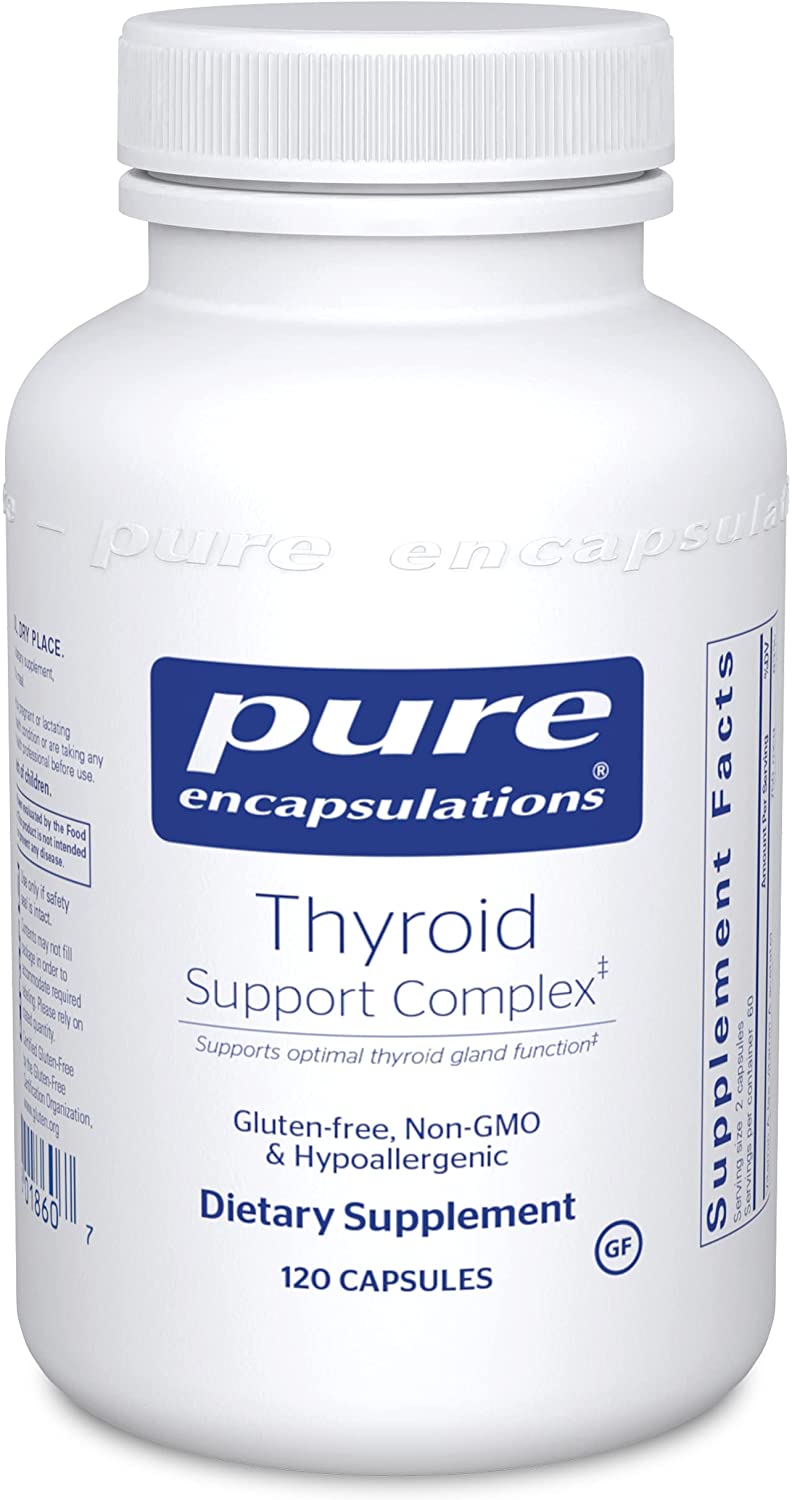
Thyroid Support Complex

Thyroid Support Complex

Regular price $116.50 NZD
Regular price Sale price $116.50 NZD
Sale Sold out
Tax included. Shipping calculated at checkout.

Thyroid Support Complex is a comprehensive practitioner-grade formula combining essential micronutrients with standardised botanical extracts to provide multi-pathway nutritional support for healthy thyroid gland function, thyroid hormone synthesis, T4-to-T3 conversion, and thyroid tissue antioxidant defence.

The formula addresses the thyroid at four distinct physiological levels: substrate provision for thyroid hormone biosynthesis; micronutrient cofactor support for thyroid cell metabolism; adenylate cyclase activation for thyroid hormone metabolic signalling; and antioxidant protection of the rate-limiting enzymatic step governing active hormone conversion.

Micronutrient Cofactors for Thyroid Cell Metabolism Healthy thyroid function depends critically on the status of several specific micronutrients. Vitamin A, vitamin D3, zinc, and selenium are each associated with maintaining healthy thyroid cell metabolism and the normal function of both thyroxine (T4) and triiodothyronine (T3).

Selenium is provided as selenomethionine at 200 mcg per serving — the most bioavailable organic form of selenium. Selenium is an essential component of the iodothyronine deiodinase enzyme family (particularly types 1 and 2 deiodinases, ID1 and ID2), which catalyses the conversion of the largely inactive prohormone T4 to the biologically active T3. Adequate selenium status is therefore a prerequisite for efficient peripheral T4-to-T3 conversion, and selenium deficiency is among the most direct nutritional contributors to suboptimal active thyroid hormone availability. Selenium is also a core constituent of glutathione peroxidase, which protects thyroid tissue from the hydrogen peroxide generated during thyroid hormone synthesis.

Zinc is provided as zinc citrate at 20 mg per serving, in a chelated form for enhanced gastrointestinal absorption. Zinc is required for thyroid-stimulating hormone (TSH) receptor function and for the normal activity of thyroid hormone nuclear receptors — the intranuclear proteins through which T3 exerts its genomic effects on cellular metabolism.

Vitamin D3 (as cholecalciferol, 200 IU / 5 mcg) contributes to thyroid cell metabolism. While the dose in this formula is modest and should not be considered a standalone therapeutic vitamin D3 dose, it provides foundational micronutrient presence alongside the remainder of the formula's components.

Vitamin A (as vitamin A acetate, 750 mcg RAE / 2,500 IU) supports thyroid cell differentiation and is associated with healthy thyroid hormone receptor expression.

Iodine and L-Tyrosine — Thyroid Hormone Biosynthesis Substrates Iodine and L-tyrosine are the two direct precursor substrates from which both T4 (thyroxine) and T3 (triiodothyronine) are synthesised within thyroid follicular cells.

Iodine is provided at 150 mcg per serving from whole-plant kelp (Ascophyllum nodosum), standardised to 0.5% iodine, delivering a physiologically meaningful dose aligned with the NZ estimated average requirement for adults. Kelp provides iodine in its naturally occurring matrix alongside trace minerals present in marine plant sources.

L-Tyrosine is included at 500 mg per serving in its free-form, most bioavailable configuration. Within thyroid follicular cells, iodine is covalently incorporated onto tyrosine residues of thyroglobulin by thyroid peroxidase (TPO) to form monoiodotyrosine (MIT) and diiodotyrosine (DIT), which are then coupled to produce T3 and T4, respectively.

ForsLean® Coleus forskohlii — Adenylate Cyclase Support Coleus forskohlii (Coleus forskohlii) root extract is included at 100 mg, standardised to 10% forskolin (10 mg per serving), as ForsLean® — a trademark of Sabinsa Corporation. Forskolin is a labdane diterpene that directly activates adenylate cyclase, the enzyme that catalyses the conversion of ATP to cyclic AMP (cAMP). Elevated intracellular cAMP acts as a second messenger that stimulates thyroid follicular cell activity, supporting thyroid hormone synthesis and secretion. ForsLean® is a standardised, quality-assured form of this ingredient, distinct from commodity unstandardised coleus powders.

Ashwagandha (Withania somnifera) — Adaptogenic Support for Thyroid Axis Regulation Ashwagandha root extract is included at 400 mg, standardised to 2.5% withanolides (10 mg per serving). Research indicates ashwagandha is a key adaptogenic factor in sustaining healthy thyroid function, with clinical evidence supporting its role in maintaining thyroid hormone levels within normal ranges. As an adaptogenic herb, ashwagandha also helps moderate the hypothalamic-pituitary-adrenal (HPA) axis, which has bidirectional regulatory influence on thyroid axis activity — chronic HPA dysregulation and elevated cortisol are associated with suppressed TSH and impaired T4-to-T3 peripheral conversion.

Guggul (Commiphora mukul) — Thyroid Support and Antioxidant Defence Guggul gum resin extract is included at 150 mg, standardised to 2.5% guggulsterones (3.75 mg per serving). Guggulsterones — the bioactive steroidal constituents of Commiphora mukul — have been demonstrated in research to help sustain healthy thyroid function and to contribute antioxidant activity. In the context of this formula, guggulsterones act as part of the antioxidant complex that helps maintain the activity of iodothyronine 5'-monodeiodinase, the enzyme governing T4-to-T3 conversion.

Antioxidant Protection of the T4-to-T3 Conversion Pathway The iodothyronine 5'-monodeiodinase enzymes (ID1/ID2) that catalyse the peripheral conversion of T4 to T3 are selenoproteins highly sensitive to oxidative inhibition. Reactive oxygen species can impair their activity, reducing the efficiency of T4-to-T3 conversion and effectively reducing the availability of biologically active thyroid hormone, independent of TSH or T4 production status.

Vitamins A and C, selenium, guggulsterones, and curcumin (from turmeric extract) collectively provide multi-source antioxidant protection that helps maintain the enzymatic environment in which this critical conversion occurs. Turmeric (Curcuma longa) root extract is included at 100 mg, standardised to 95% curcuminoids, providing both antioxidant support and anti-inflammatory cofactor activity within thyroid tissue.


Why Thyroid Support Complex?

  • Multi-pathway, mechanistically coherent design. The formula addresses thyroid hormone substrate provision, micronutrient cofactor status, adenylate cyclase signalling, and deiodinase enzyme protection — four distinct and complementary physiological levels — in a single formulation.
  • Standardised botanical extracts at clinically relevant doses. All four botanical constituents are standardised to their active marker compounds — withanolides, forskolin, guggulsterones, and curcuminoids — ensuring consistent and meaningful constituent delivery per serving.
  • ForsLean® — a trademarked, quality-assured Coleus forskohlii extract. Standardised to 10% forskolin by Sabinsa Corporation, a trademark holder with extensive research investment in this ingredient.
  • Selenium as selenomethionine. The superior organic form directly addresses the most common and clinically impactful micronutrient bottleneck in peripheral T4-to-T3 conversion.
  • Zinc as zinc citrate. Enhanced absorption versus less bioavailable forms.
  • Iodine from whole-plant kelp (Ascophyllum nodosum). Naturally occurring iodine matrix rather than a pure inorganic iodide salt.
  • Hypoallergenic formulation. Free from gluten, dairy, soy protein (note: L-tyrosine is soy-derived — see allergen note), eggs, tree nuts, peanuts, artificial colours, flavours, sweeteners, GMOs, magnesium stearate, and unnecessary fillers.

Supplement Facts

Serving Size: 2 Vegetarian Capsules Servings Per Container: 60 (120-capsule bottle)

Ingredient Amount Per Serving
Vitamin A (as vitamin A acetate) 750 mcg RAE (2,500 IU)
Vitamin C (as ascorbic acid) 150 mg
Vitamin D3 (as cholecalciferol) 5 mcg (200 IU)
Iodine (from kelp, Ascophyllum nodosum, whole plant) 150 mcg
Zinc (as zinc citrate) 20 mg
Selenium (as selenomethionine) 200 mcg
L-Tyrosine (free-form) 500 mg
Ashwagandha (Withania somnifera) Extract (root) (2.5% withanolides) 400 mg
ForsLean® Forskohlii (Coleus forskohlii) Extract (root) (10% forskolin) 100 mg
Guggul (Commiphora mukul) Extract (gum resin) (2.5% guggulsterones) 150 mg
Turmeric (Curcuma longa) Extract (root) (95% curcuminoids) 100 mg

Other Ingredients: Vegetarian capsule (cellulose, water), ascorbyl palmitate.

ForsLean® is a registered trademark of Sabinsa Corporation.


Directions for Use

Take 2 capsules daily with a meal, or as directed by your healthcare practitioner.


Allergen Information

Free from: gluten, wheat, dairy, eggs, tree nuts, peanuts, artificial colours, flavours, sweeteners, GMOs, magnesium stearate, and unnecessary fillers.

Note: L-Tyrosine in this formula is derived from soy. While soy protein is not present, individuals with confirmed soy allergy should consult their healthcare practitioner before use.

Suitable for vegetarians. Not recommended during pregnancy or lactation.


Cautions & Contraindications

  • Not to be taken by pregnant or lactating women.
  • Additive effect with thyroid medications: Ashwagandha, guggul, and L-tyrosine may have an additive effect with thyroid hormone medications including levothyroxine and liothyronine. Patients taking thyroid medications must consult their prescribing practitioner before commencing this product and should have thyroid function monitored after initiation.
  • Benzodiazepines and CNS depressants: Certain ingredients in this formula may be contraindicated for individuals taking benzodiazepines or other CNS depressant medications. Consult your healthcare practitioner.
  • Immunosuppressant medications: Ashwagandha is not recommended for individuals taking immunosuppressant medications.
  • Anticoagulant medications: Certain ingredients may interact with blood-thinning medications, including warfarin. Consult your healthcare practitioner.
  • Guggul may cause a skin rash in sensitive individuals; discontinue use if this occurs.
  • In rare cases, certain ingredients may cause nausea, vomiting, diarrhoea, headache, or fatigue.
  • If you have any health conditions or are taking any medication, consult your healthcare practitioner before use.
  • Keep out of reach of children.
  • Store in a cool, dry place.

Practitioner Notes

Thyroid Support Complex is a well-constructed foundational thyroid support formula appropriate for patients with subclinical thyroid insufficiency, those in the early stages of thyroid axis dysregulation, or as complementary nutritional support alongside supervised thyroid management. Several clinical points warrant emphasis in your dispensing practice:

This is a practitioner-only dispensing product. The interaction profile — particularly the additive effect of ashwagandha, guggul, and L-tyrosine with thyroid hormone medications — means this product should not be self-selected from a retail shelf. Patients already on levothyroxine (Eltroxin, Synthroid) or liothyronine who initiate this product without practitioner guidance risk inadvertent dose escalation of thyroid hormone effect, with potential consequences including tachycardia, anxiety, insomnia, and weight loss. Thyroid function testing (TSH, free T4, free T3) before and 6–8 weeks after initiation is strongly advisable in this population.

Selenium at 200 mcg — the single most impactful nutrient for T4-to-T3 conversion: This dose is well within the tolerable upper level (400 mcg/day) and is clinically meaningful for deiodinase enzyme function. New Zealand soils are notably selenium-depleted, and suboptimal selenium status is common in the NZ population — making selenium one of the most relevant micronutrient inclusions for your patient base specifically.

Ashwagandha standardisation — 2.5% withanolides: This is a mid-range standardisation, equivalent to 10 mg withanolides per serving. Clinical trials on ashwagandha and thyroid function have used doses ranging from 300–600 mg/day of standardised extract, with the most relevant thyroid study (Sharma et al., 2018, JAMA Network Open precursor data) using 600 mg/day. At 400 mg with 2.5% withanolides, this formula is at the lower end of the clinical dosing range — appropriate for long-term foundational support but potentially insufficient as a standalone intervention in more significant thyroid axis dysfunction.

Iodine from kelp — a nuanced consideration for autoimmune thyroid disease: In patients with Hashimoto's thyroiditis, supplemental iodine remains a clinically contested area. Some evidence suggests that iodine supplementation — even at physiological doses — may exacerbate autoimmune thyroid activity in genetically susceptible individuals by increasing the immunogenicity of thyroglobulin. For patients with confirmed Hashimoto's thyroiditis or elevated thyroid peroxidase (TPO) antibodies, the decision to include this product requires careful clinical judgement and baseline antibody testing. This caveat applies to all iodine-containing thyroid support formulas, not this product specifically.

Vitamin D3 at 200 IU: This is a nominally low dose — the NZ estimated adequate intake for adults under 50 is 5 mcg (200 IU) per day, so it meets minimum requirements but is unlikely to meaningfully improve vitamin D status in deficient patients. For thyroid function support, vitamin D3 is best addressed with a standalone supplement at clinically relevant doses (1,000–2,000 IU/day or higher based on serum 25(OH)D), used alongside this product.

L-Tyrosine from soy: While the tyrosine is provided in free-form amino acid format (not soy protein), patients with significant soy sensitivity or confirmed soy allergy should be counselled about the source. In practice, most patients with soy sensitivity tolerate free-form amino acids derived from soy processing without reaction.

View full details