
Skip to product information
1 of 1

Researched Nutritionals

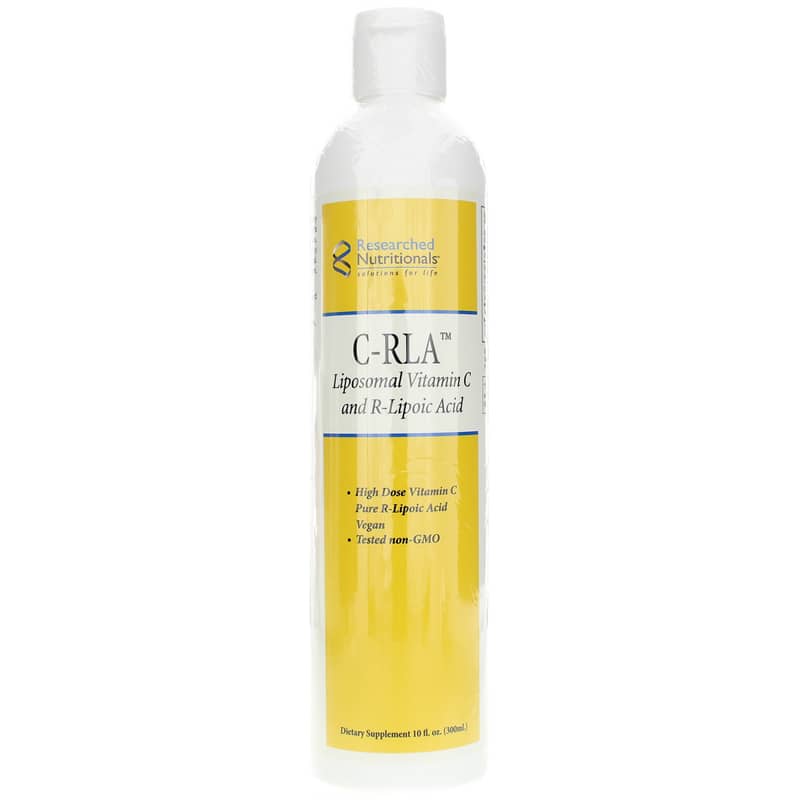
C-RLA

C-RLA

Regular price $109.00 NZD
Regular price Sale price $109.00 NZD
Sale Sold out
Tax included. Shipping calculated at checkout.

This is a practitioner-grade product. Please log in or register to purchase this product

If you already have an account, you can login here:

C-RLA™ is a practitioner-formulated liposomal liquid combining high-dose vitamin C (as sodium ascorbate) with pure R-lipoic acid (as sodium R-lipoic acid) in a single, soy-free, sunflower phosphatidylcholine-based liposomal preparation. It is designed to deliver clinically relevant doses of both actives with significantly enhanced gastrointestinal tolerability and cellular uptake compared to conventional oral vitamin C formats.

The Liposomal Delivery Advantage Oral vitamin C absorption is subject to a well-documented saturable transport mechanism. At doses above approximately 200–250 mg, intestinal absorption efficiency drops sharply, and doses above 1,000 mg are typically associated with gastrointestinal discomfort including osmotic diarrhoea. Liposomal encapsulation circumvents this limitation by enveloping the active ingredients within phospholipid bilayer vesicles that closely mimic the structure of cellular membranes. These liposomes are taken up via endocytosis, bypassing the conventional sodium-dependent vitamin C transporter (SVCT) pathway and facilitating intracellular delivery of vitamin C at doses that would be poorly absorbed — and gastro-intolerant — in standard oral form.

The phospholipids in C-RLA™ are derived exclusively from sunflower lecithin — a meaningful formulation decision for patients with soy sensitivities or those avoiding soy-derived ingredients — and are certified GMO-free.

Vitamin C as Sodium Ascorbate Vitamin C is delivered in its sodium ascorbate form rather than as ascorbic acid. Sodium ascorbate is a buffered, non-acidic form of vitamin C with a neutral pH, making it substantially gentler on gastric mucosa at high doses. At the recommended serving of 10 mL, each dose provides 1,500 mg of vitamin C. Patients on sodium-restricted diets should be advised that each serving provides approximately 170–190 mg of sodium from the sodium ascorbate carrier.

Pure R-Lipoic Acid (R-LA) as Sodium R-Lipoic Acid Alpha-lipoic acid exists as two steroisomeric forms: the R-form (naturally occurring, endogenous) and the S-form (produced synthetically). The vast majority of commercially available alpha-lipoic acid supplements contain a racemic 50:50 mixture of R and S isomers. The R-form is the biologically active component — the endogenous form present in human mitochondrial enzyme complexes, including pyruvate dehydrogenase and alpha-ketoglutarate dehydrogenase. Research suggests that pure R-lipoic acid may be significantly more biologically active than the racemic mixture, as the S-form is inactive in these enzyme systems and may competitively inhibit the R-form's metabolic roles.

C-RLA™ provides 70 mg of pure R-lipoic acid per serving, delivered as sodium R-lipoic acid. This salt form is used deliberately: free R-lipoic acid is highly unstable and susceptible to polymerisation at room temperature, rendering it biologically inactive. The sodium salt significantly stabilises the molecule without diminishing its bioactivity — an important quality consideration not addressed by most commercially available R-LA products.

R-lipoic acid functions as a potent free radical scavenger across both aqueous and lipophilic cellular compartments, distinguishing it from antioxidants that are active in only one phase. It also plays a central role in the regeneration of other endogenous antioxidants, including glutathione, vitamins C and E, and coenzyme Q10 — acting as a master antioxidant network recycler. Additionally, R-LA is a cofactor in mitochondrial dehydrogenase complexes and supports healthy glucose metabolism by helping maintain insulin sensitivity and mitochondrial bioenergetic function.

Allulose as Natural Preservative and Sweetener Allulose (D-allulose, also known as D-psicose) is a naturally occurring rare monosaccharide found in small quantities in figs, jackfruit, and raisins. It has two functional roles in this formulation: it reduces water activity within the liquid preparation, preventing microbial growth without the need for synthetic preservatives; and it serves as a natural low-calorie sweetener that effectively masks the characteristically bitter and sulphurous taste of lipoic acid. Allulose is not metabolised as a conventional carbohydrate and does not meaningfully raise blood glucose or insulin levels, making it suitable for patients with insulin resistance or for blood sugar management.


Why C-RLA™?

High-dose vitamin C is widely used in integrative clinical practice, yet its oral delivery at therapeutically relevant doses has historically been constrained by gastrointestinal tolerability and saturable absorption. C-RLA™ differentiates on several grounds that matter in a practitioner context:

  • Liposomal delivery from sunflower phosphatidylcholine. Not soy-derived; GMO-free. Enables clinically relevant high-dose vitamin C delivery without gastrointestinal distress or dependence on intestinal SVCT transporters.
  • Pure R-lipoic acid, not racemic dl-alpha-lipoic acid. The biologically active endogenous isomer, delivered in a stabilised sodium salt form specifically to prevent polymerisation — a quality consideration absent from most alpha-lipoic acid products.
  • Sodium ascorbate rather than ascorbic acid. Buffered, neutral-pH vitamin C delivery; substantially better tolerated at high doses, particularly relevant for patients with gastro-oesophageal reflux, gastritis, or gastric sensitivity.
  • Complementary synergy between the two actives. R-lipoic acid and vitamin C have a well-documented antioxidant network relationship: lipoic acid regenerates oxidised ascorbate back to reduced (active) vitamin C, extending the effective antioxidant action of each dose.
  • Clean excipient profile. Allulose, deionised water, sunflower lecithin, flavour/botanical extracts, and stevia (Vanilla Caramel) or peppermint/spearmint oils and liquorice extract (Original). No synthetic preservatives, artificial sweeteners, colours, or unnecessary additives.
  • Vegan, gluten-free, soy-free. Manufactured without milk, eggs, fish, shellfish, tree nuts, peanuts, wheat, soy, or gluten.

Supplement Facts

Serving Size: 2 teaspoons (10 mL) Servings Per Container: 30

Ingredient Amount Per Serving
Vitamin C (as Sodium Ascorbate) 1,500 mg
Sodium (as Sodium Ascorbate) ~175 mg†
R-Lipoic Acid (as Sodium R-Lipoic Acid) 70 mg

†Approximate value; patients on sodium-restricted diets should factor this into their daily sodium intake.

Other Ingredients (Vanilla Caramel): Allulose, deionised water, sunflower lecithin, vanilla extract, grapefruit seed extract, stevia extract.

Other Ingredients (Original/Peppermint): Allulose, deionised water, sunflower lecithin, liquorice extract, peppermint oil, spearmint oil.


Directions for Use

Mix 2 teaspoons (10 mL) in water and take away from food, or as directed by your healthcare practitioner. Shake well before use. Refrigerate after opening.


Allergen Information

Manufactured without milk, eggs, fish, shellfish, tree nuts, peanuts, wheat, soy, or gluten. Produced in a facility that may process ingredients containing these allergens. Suitable for vegetarians and vegans. GMO-free. Soy-free.


Cautions & Contraindications

  • Patients on sodium-restricted diets (e.g., for hypertension or renal disease) should account for the sodium content (~175 mg per serving) from the sodium ascorbate carrier. Consult your healthcare practitioner before use.
  • At very high doses, vitamin C may cause loose stools or gastrointestinal discomfort; the liposomal delivery significantly reduces but does not completely eliminate this risk in highly sensitive individuals.
  • R-lipoic acid may enhance insulin sensitivity and influence blood glucose regulation. Patients taking insulin or oral hypoglycaemic agents should be monitored and consult their healthcare practitioner before use.
  • Vitamin C at high doses may increase oxalate production; patients with a history of calcium oxalate urolithiasis should use it with caution and under practitioner supervision.
  • Not recommended during pregnancy or lactation without professional supervision.
  • Keep out of reach of children.
  • Refrigerate after opening; consume within the period indicated on the label.

Practitioner Notes — Stephen Roigard

C-RLA™ occupies a specific and well-justified clinical niche: patients requiring high-dose vitamin C supplementation who cannot tolerate or absorb conventional oral vitamin C at therapeutic doses, and those in whom the combined antioxidant/mitochondrial support of R-lipoic acid is clinically indicated alongside vitamin C. Key considerations for patient selection and dosing:

Clinical applications where this product is particularly well-suited: The combination of high-dose liposomal vitamin C and pure R-lipoic acid is relevant across several overlapping clinical scenarios encountered in integrative practice: post-viral fatigue and long-term immune dysregulation, oxidative stress-driven metabolic presentations (insulin resistance, mitochondrial dysfunction), heavy metal/toxicant exposure and Phase II hepatic detoxification support (lipoic acid chelates transition metals including mercury, cadmium, and arsenic, and supports glutathione synthesis), and chronic inflammatory states where antioxidant network depletion is a feature.

"Detox" framing — note for clinical communication: While Researched Nutritionals and US retailers use "detox" language prominently in marketing, this term is not a recognised NZ structure/function claim and has been excluded from the website listing accordingly. In clinical consultations, you can accurately describe R-lipoic acid's role in supporting Phase II detoxification enzyme activity (glutathione S-transferase, NAD(P)H:quinone oxidoreductase) and its metal-chelating properties without invoking the "detox" shorthand.

R-LA dose at 70 mg per serving: At 1–2 servings per day, patients receive 70–140 mg of pure R-lipoic acid. Standard R-lipoic acid clinical trial doses have ranged from 100 mg to 600 mg/day. The 70 mg per serving dose is appropriate as a foundational antioxidant/metabolic support dose. For patients requiring higher R-LA doses (e.g., diabetic peripheral neuropathy protocols, heavy metal clearance), consider supplementing with a standalone R-LA product alongside C-RLA™.

Sodium load: At the full two-serving daily dose (20 mL), the patient receives approximately 350 mg of sodium from the sodium ascorbate carrier. This is not clinically significant for most patients, but warrants mention for those on strict sodium restriction (e.g., stage 3+ chronic kidney disease, uncontrolled hypertension).

Stability and storage: Unlike most liquid supplements, C-RLA™ requires refrigeration after opening. This is a direct consequence of the liposomal preparation and the inherent instability of R-lipoic acid at room temperature. Advise patients accordingly at the point of dispensing to minimise returns or quality complaints.

View full details